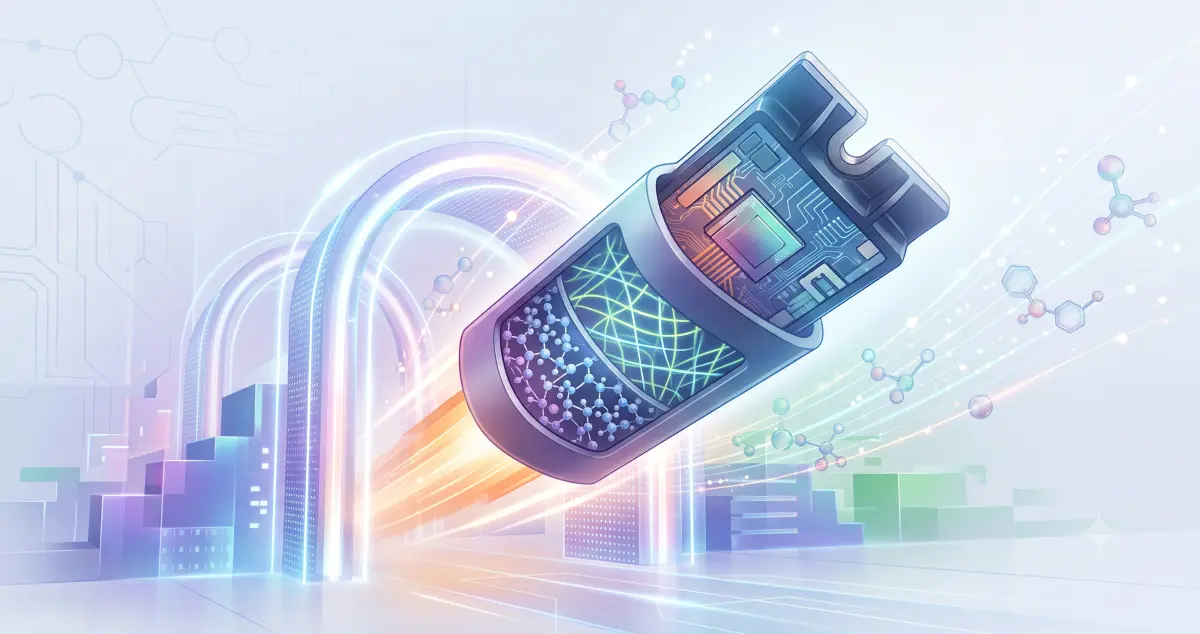
Mizuho Bank announced on April 28, 2026, that it has launched a joint study with the Ishizaka Group, Nishiki, and Nifco to explore the recycling of plastic waste generated by the semiconductor industry into materials for automotive components. Conducted in Kyushu - one of Japan's major hubs for both semiconductor manufacturing and automotive production - the project will evaluate the entire chain, from advanced waste sorting and material compounding to component molding and performance testing. If it works, the partners say the model could support a supply chain that connects manufacturing and recycling industries within a single region.
("X" in "X to Car" stands for any upstream waste stream outside the automotive industry;
here, it is the semiconductor sector.)
Semiconductor Plastic Waste Remains Dependent on Incineration and Landfill
As semiconductor manufacturing continues to expand in Kyushu, substantial volumes of plastic waste are being generated, with further increases expected in the coming years. Most of it is currently handled through thermal recycling - recovering energy from incineration - or is disposed of through incineration or landfill. Material recycling, in which waste plastics are reprocessed into raw materials for new products, remains limited.
This is the gap the study is aimed at: not whether the waste can be collected, but whether it can be turned into something a carmaker will actually accept.
The Regulatory Backdrop - and Its Limits
The companies cite the European Union's incoming End-of-Life Vehicles (ELV) Regulation as a driver of demand for recycled plastics. The Regulation will replace the current ELV Directive (2000/53/EC) and the 3R type-approval Directive with a single instrument. Parliament and Council reached a provisional agreement in December 2025; Coreper and the joint ENVI-IMCO committee endorsed it in February 2026, and formal adoption is expected around mid-2026.
Under the agreed text, the plastic used in each new vehicle type must contain at least 15% recycled content six years after the Regulation enters into force, rising to 25% after ten years. At least 20% of that recycled content must come from closed-loop sources - plastics recovered from end-of-life vehicles themselves.
One caveat deserves attention. The provisional text allows only post-consumer recycled material to count toward the minimum recycled-content targets. Plastic waste from a semiconductor plant is post-industrial, which means that, as the rules currently stand, material from a project like this one would not automatically count toward a carmaker's ELV compliance figure. The commercial case therefore rests less on regulatory compliance in the narrow sense, and more on what the ELV Regulation does to the wider market: it makes any reliable source of automotive-grade recycled plastic scarcer and more valuable, and it pushes carmakers to secure recycled feedstock well before the targets bite. That is the demand the partners are positioning against.
The "X to Car" Model: Four Companies, Distinct Roles
Each partner covers a different stage of the chain. The Ishizaka Group - a resource-recovery cooperative known for its advanced waste-sorting technologies and its track record in building recycling networks - will collect and sort semiconductor-related plastic waste according to its intended application. Nishiki will process the recovered material and develop compounds that meet automotive specifications.
Nifco will use those compounds to develop automotive components and assess their manufacturability, looking at mechanical performance, durability, and quality consistency. Mizuho Bank will examine the financing and business-model mechanisms needed to establish and scale the chain.
The division of labor is the point. A recycled material fails an automaker's qualification not because it is dirty, but because it is inconsistent - and consistency has to be engineered at every stage, from the sorting line onward.
Growing Momentum for Higher-Value Plastic Recycling
The study joins a broader push to move waste plastics up the value chain, through both chemical and mechanical routes.
Resonac has operated its Kawasaki Plastic Recycling (KPR) business since 2003. The plant gasifies used plastics, breaking them down to the molecular level to yield hydrogen and carbon dioxide; the hydrogen is used as feedstock for ammonia production, and the carbon dioxide is recovered for use in dry ice and liquefied carbon dioxide rather than released.
In September 2025, Resonac's plan to produce ammonia using only used-plastic-derived hydrogen received the first certification in Japan under the price-gap support scheme established by the Hydrogen Society Promotion Act - a program designed to close the cost gap between conventional and low-carbon products. The company has since decided to expand the low-carbon ammonia business on that basis.
In the automotive recycling sector, DENSO, Toray, Honda, Nomura Research Institute, MATEC, and REVER established the BlueRebirth Council in June 2025. The Council aims to recover high-purity, single-material plastics from end-of-life vehicles through automated precision dismantling using robotics and AI, so that the recovered material can re-enter vehicle manufacturing - a "Car to Car" loop.
Set against these, the Mizuho-led study takes a different angle. BlueRebirth closes the loop within the automotive industry; this project opens a loop between industries, treating one sector's waste as another's feedstock. Whether that works will come down to a question this study exists to answer: can plastic that was never designed to become a car part be made consistent enough to become one?