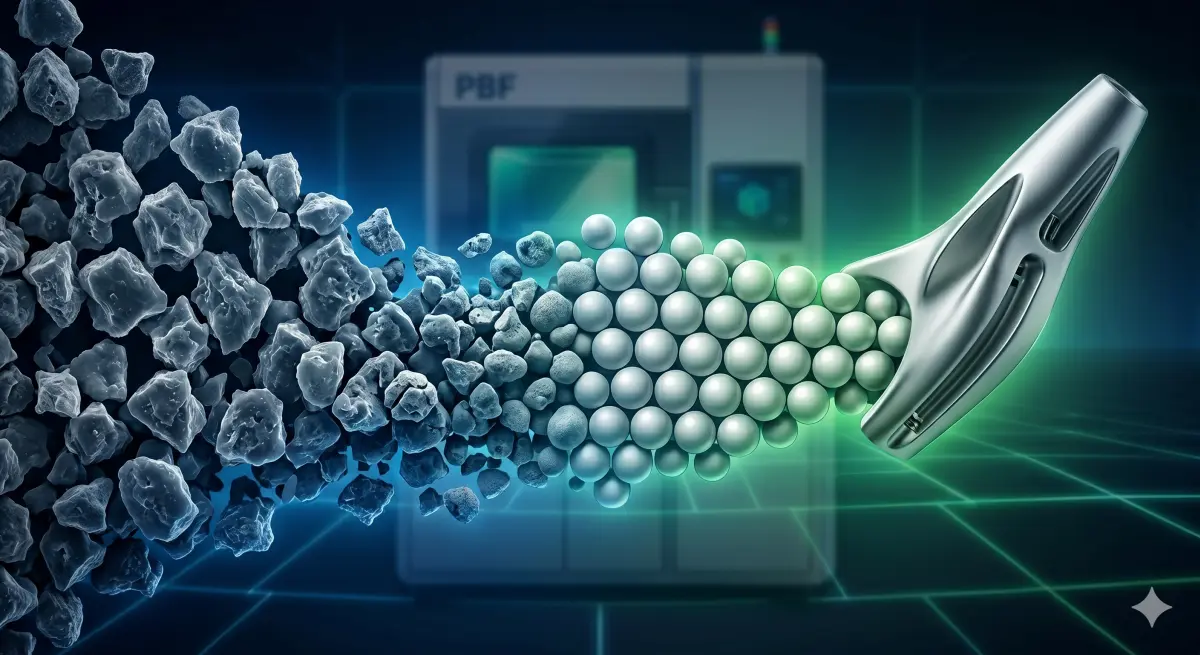
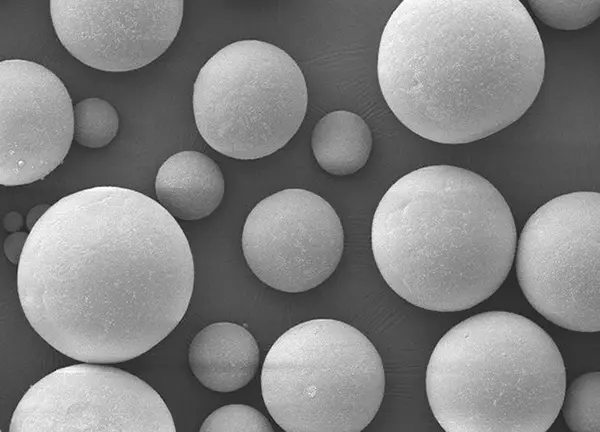
Toray announced in February 2026 the development of Toraypearl PA12, a highly spherical polyamide 12 (PA12) powder designed for powder bed fusion (PBF) 3D printers. By leveraging its proprietary spherical particle technology, the company has approximately 2.5× improved surface smoothness and more than doubled the Charpy impact strength compared with conventional PA12 powders. Sample evaluations with selected customers have been underway since January 2026.
Enhancing Durability and Surface Finish
Toraypearl PA12 achieves a surface roughness (Ra) of approximately 7 μm and a Charpy impact strength of 50 kJ/m²—representing about 2.5× the surface smoothness and more than 2× the impact strength of conventional PA12 powders. These improvements stem from the uniform packing and dense, homogeneous arrangement of spherical particles, which enhances sintering and fusion behavior during the PBF process.
The material is suited to a wide range of applications, from prototyping to functional parts, particularly where durability, airtightness, and mechanical reliability are required. It is also designed for broad compatibility with existing PBF-type 3D printing systems.
image-iframe-box
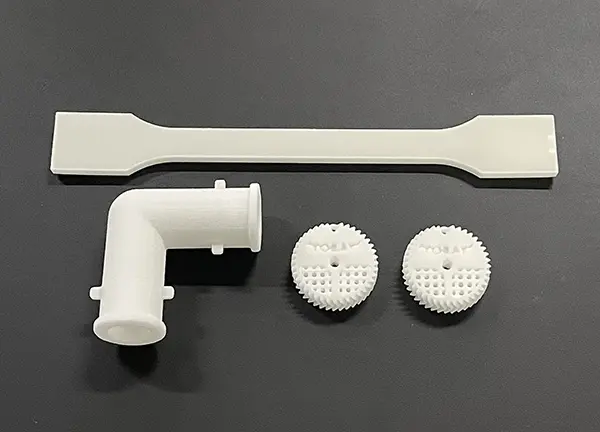
image-title
Photo courtesy of Toray
Toray's spherical particle technology builds on its long-standing expertise in polyamide polymerization and resin processing. The company previously commercialized Toraypearl™ PA6, a heat-resistant spherical PA6 powder that has been adopted in applications such as automotive components, office chairs, and power tools. Toraypearl PA12 extends this technology platform to PA12.
Overcoming Conventional Powder Limitations
PBF-type 3D printing is widely adopted in industrial applications for its ability to produce parts with high dimensional accuracy and mechanical performance. Among polymer feedstocks, PA12 accounts for approximately 70% of the polymer PBF market, owing to its good processability at relatively low temperatures.
However, conventional PA12 powders typically consist of irregularly shaped particles, which hinder uniform packing. This often results in rougher part surfaces and necessitates post-processing such as polishing. Inter-particle gaps can also generate internal micro-voids in molded parts, reducing density and preventing the material from fully exhibiting its intrinsic mechanical properties—including impact strength.
The development of resin materials for 3D printers remains an active area within the materials industry. Toray entered this space with Toraymill™ PPS, a polyphenylene sulfide milled powder launched in 2017, followed by Toraypearl PA6 in 2022. The addition of Toraypearl PA12 further expands its product portfolio for the growing 3D printing market.
In 2024, Asahi Kasei and Italy's Aquafil began collaborating on a 3D printing material that combines Aquafil's ECONYL®—a chemically recycled PA6 derived from waste such as used fishing nets and old carpets—with Asahi Kasei's cellulose nanofiber (CNF) technology, targeting automotive and aerospace applications. Building on this CNF expertise, Asahi Kasei subsequently commercialized KARAKSA™ F filaments (BX113 and DX205), PA-based filaments reinforced with CNF, designed for industrial FFF 3D printing.
Germany's BASF, through its subsidiary BASF 3D Printing Solutions, offers a wide range of filaments for Fused Deposition Modeling (FDM), including Ultrafuse® PAHT CF15, a polyamide matrix reinforced with 15% carbon fiber. While other material manufacturers differentiate themselves through reinforcing fibers and recycled raw materials, Toray's approach focuses on optimizing particle morphology—a strategy that directly addresses fundamental performance limitations in powder-based 3D printing.
Enhancing Durability and Surface Finish
In molded parts, Trepearl PA12 achieves a surface roughness of approximately 7 μm and a Charpy impact strength of 50 kJ/m² (unnotched), attributable to improved sintering and fusion behavior enabled by uniformly packed, high-density spherical particles. It is expected to be suitable for a wide range of applications, from prototyping to functional components, particularly where durability and airtightness are required. The material is also compatible with existing 3D printing systems.
Toray’s spherical particle technology builds on its long-standing expertise in polyamide polymerization and resin processing. The company previously commercialized "Trepearl PA6," heat-resistant, highly spherical PA6 powder, which has seen adoption in applications such as automotive components, office furniture, and power tools. Trepearl PA12 extends this technology platform to PA12.
Overcoming Conventional Powder Limitations
Powder bed fusion (PBF) 3D printers are predominantly used in industrial applications. Among resin powders, PA12 is estimated to account for roughly 70% of the market due to its suitability for low-temperature sintering. However, conventional PA12 powders typically consist of irregularly shaped particles, which limits packing uniformity. This often results in rougher part surfaces and necessitates post-processing steps such as polishing. In addition, inter-particle gaps can generate microvoids within molded parts, reducing density and preventing the material from fully realizing its intrinsic mechanical properties.
The development of resin materials for 3D printers remains an active area within the material industry. Toray entered this space with "Tremil PPS resin powder" in 2017, followed by Trepearl PA6 in 2022. The addition of Trepearl PA12 further expands its product portfolio.
In March 2026, Asahi Kasei began commercializing "KARAKSA-F," a PA-based filament reinforced with cellulose nanofibers (CNF). The material offers high strength and heat resistance, making it suitable for industrial applications. The company is also collaborating with Italy’s Aquafil to develop 3D printing materials based on “ECONYL,” a recycled PA6 derived from nylon waste, targeting automotive and aerospace applications.
Germany's BASF, through its subsidiary BASF 3D Printing Solutions, offers a wide range of filaments for Fused Deposition Modeling (FDM), including "Ultrafuse PAHT CF15," which contains 15% reinforcement in a polyamide matrix. While other material manufacturers differentiate themselves through the use of reinforcing fibers and recycled raw materials, Toray is creating new value by optimizing particle morphology—an approach that directly addresses fundamental performance limitations in powder-based 3D printing.