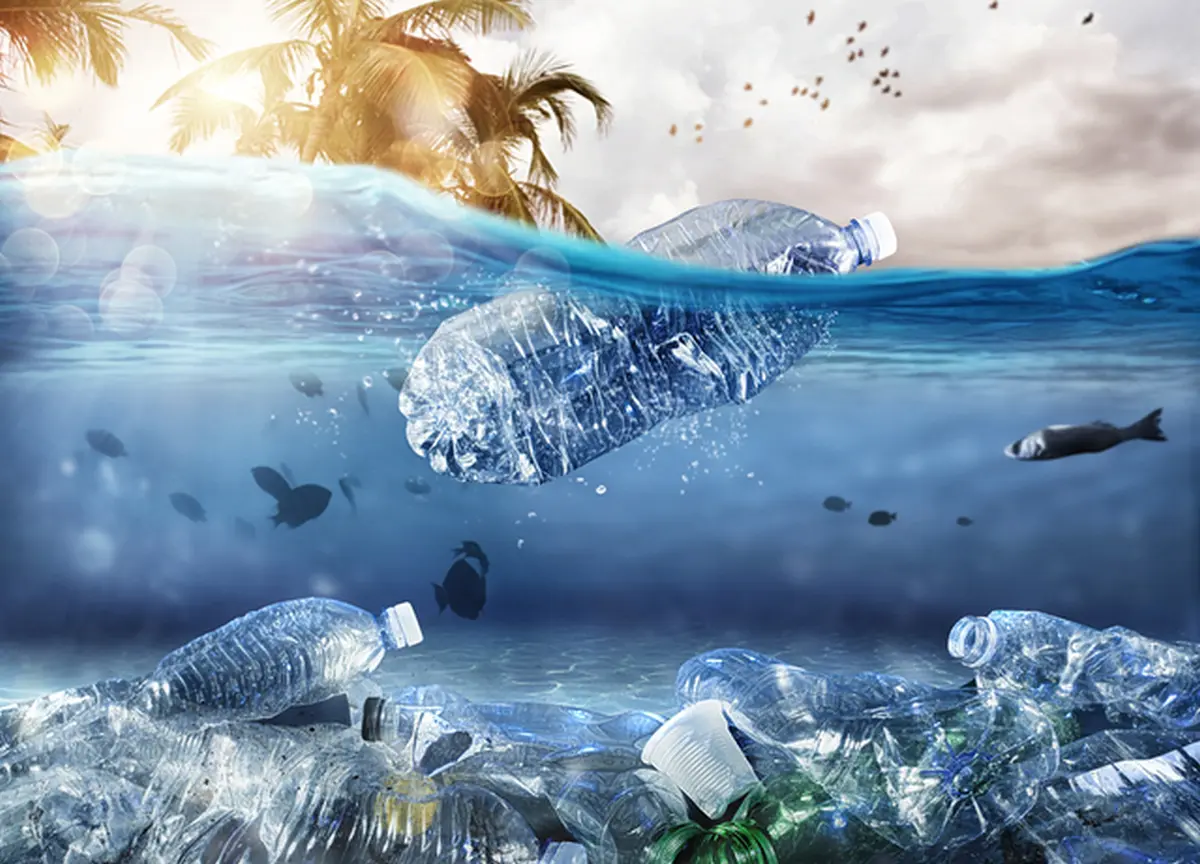
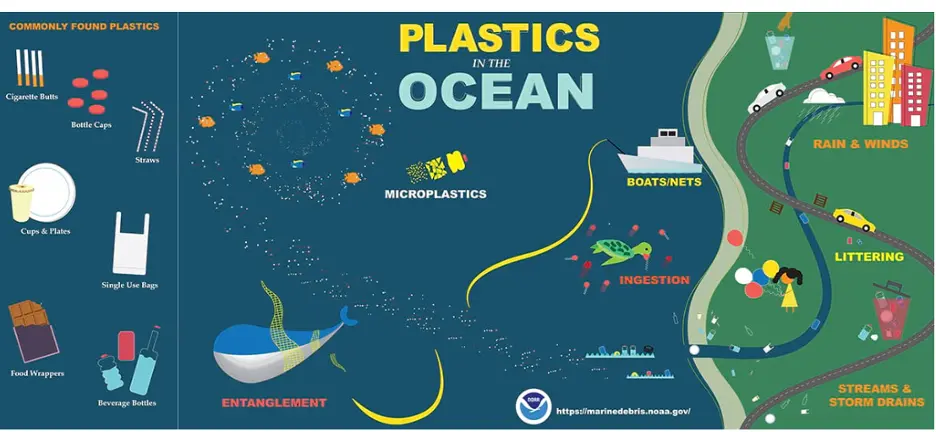
Plastic pollution's effects can be felt worldwide, and according to the National Oceanic and Atmospheric Administration (NOAA), plastics are the most common form of marine debris.
Ocean plastic pollution touches everything from human health and marine life to climate change. Thankfully, ocean recycling projects can create a sustainable future for one of our planet's most vital resources.
How much plastic is in the ocean?
According to the United National Educational, Scientific and Cultural Organization (UNESCO), in 2022, 80% of marine pollution is caused by the nearly 8 to 10 million metric tons of plastic that ends up in the ocean annually.
Ocean bound plastic, waste that hasn’t made it to the ocean but is at high risk of getting there, is on the rise. In fact, the World Economic Forum says that research shows that by 2050, there might be more plastic than fish in the water.
How long does it take for plastic to degrade?
Previously, we’ve discussed how the breakdown times of plastics are influenced by the type of plastic (i.e., raw materials), the use of additives and environmental conditions. For example, plastic bags can take 20 to years to degrade, straws can take up to 200 years, and bottles can take 450+ years.
And sometimes, plastic doesn’t entirely deteriorate, creating microplastics — tiny plastic particles measuring less than 5 millimeters.
Microplastics have been found in every corner of the ocean —including animals who have mistaken these particles for food. Once consumed by fish and or accumulated in the water, microplastics have been shown to enter the human food chain, causing concern about the impact on long-term health.
National Oceanic and Atmospheric Administration
How does ocean pollution affect climate change?
We know that plastic pollution in oceans is a major contributor to climate change, but among the countless reasons why two stand out are the emission of greenhouse gases and the blocking of carbon dioxide absorption.
Greenhouse gases: During erosion, plastic releases gases like ethylene and methane.
Unfortunately, prolonged exposure to water slows that process, which takes longer to decompose plastic and emit more gas into the atmosphere. Methane is particularly problematic because it has a much higher ability to trap heat than carbon dioxide, making it a direct cause of global warming.
Carbon dioxide absorption: Microplastics have been shown to alter how marine life absorbs carbon dioxide and releases oxygen. According to NOAA, at least half of Earth’s oxygen comes from ocean organisms capturing carbon through photosynthesis. When they cannot develop and duplicate carbon, the ocean loses oxygen, which, in turn, threatens its ability to moderate global temperatures.
Ways to reduce plastic pollution
How can you play a part in reducing ocean waste? Consider these ideas:
- Encourage recycling: Proper recycling prevents plastics from entering the water and keeps them from breaking down into microplastics.
- Shift behavior: Institute small changes, like choosing reusable containers, that will contribute less to the waste stream.
- Support clean-up efforts: Whether you donate your time or money, support organizations actively working on removing plastics from the ocean.
Who is making a difference?
There isn’t a single solution to reducing ocean waste; it takes work and dedication from all sides. Here are three companies who have dedicated themselves to cleaning up our waterways.
Clean Ocean Project: Believing that “everybody is part of the problem, and the solution,” Clean Ocean Project (based on the Canary Islands) not only cleans beaches but educates people on the effects of plastic pollution and brings awareness to sustainable living.
4Ocean: For each eco-friendly bracelet made from ocean plastic purchased, the company pledges to remove at least one pound of trash from oceans, rivers and coastlines worldwide. Since 2017, 4Ocean has recovered over 39 million pounds of waste.
Free the Ocean: A curated, plastic-free marketplace where purchases fund two non-profits, Sustainable Coastlines Hawaii and Parley — organizations actively removing and repurposing plastic from the oceans in high-impact locations.
Small Actions, Big Impact
Understanding ocean pollution facts and our challenges is essential in protecting the sea for future generations.