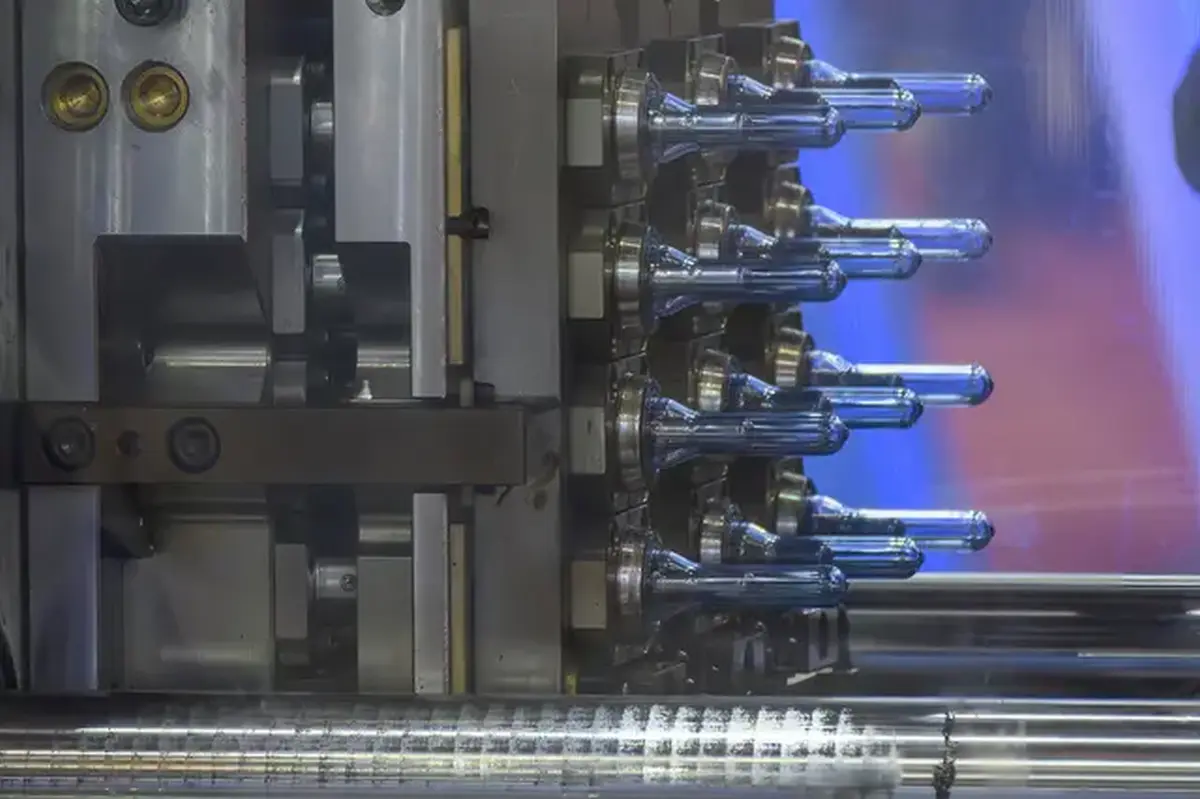
It's hard to believe that the bottle cap on your favorite beverage and your car's dashboard can be made using the same plastic manufacturing process — but it's true!
Whether it’s commercial goods, medical devices, automotive parts, or household items, many plastics today require complex shapes that can only be created using injection molding.
So, what is plastic injection molding, and how does injection molding work?
Where did injection molding start?
During the late 19th century, John Wesley Hyatt —widely known for inventing celluloid— and his brother Isaiah co-founded the Celluloid Manufacturing Company. As interest in their new synthetic material grew, they began looking for a way to not only shape celluloid but also cool it down and harden it into the desired shape. Their studies ultimately led them to develop and patent the first injection molding machine. Early uses of their machine
included small items like buttons, billiard balls, and piano keys. As interest grew, their innovation began to transform manufacturing techniques.
Throughout the 20th and 21st centuries, significant advancements, including the development of automated machines and robotics, injection molding screws, and increased energy efficiency, turned Hyatt’s simple machine into a carefully refined manufacturing process.
How Injection Molding Works
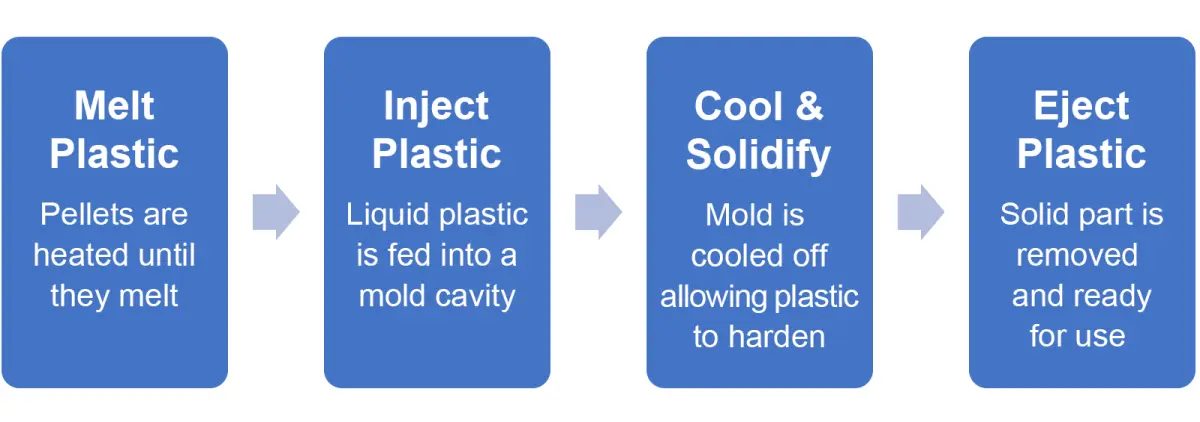
Thanks to its versatility and cost-effectiveness, the plastic injection molding process is one of the dominant manufacturing processes worldwide. Raw plastic efficiently moves through the injection molding machine like this:
What are some injection molding examples?
From your kitchen to your computer, takeout containers to medication bottles, major
global industries rely on this highly popular system to quickly produce mass
quantities of high-quality parts, including (but not limited to):
● Automotive Parts: Interior components, bumpers, engine covers.
● Consumer Electronics: Computer housings, television frames, smartphone casings.
● Medical Devices: Surgical instruments, catheters, device housings.
● Household Items: Utensils, storage bins, hangers.
● Packaging: Food containers, blister packs/pharmaceutical wrappers, bottle caps.
● Industrial Components: Gears, fasteners, safety equipment.
● Recreation: Protective accessories, fitness gear, bike parts.
Injection Molding FAQs
Q: What are the advantages of injection molding?
A: Injection molding has several advantages, including low per-part costs, reduced waste, design
flexibility, efficiency, high precision and material versatility.
Q: How do you make a plastic mold?
A: Molds, typically made of durable metals like steel or aluminum, are designed, machined/fabricated, installed, and validated to ensure the utmost accuracy in the production process.
Q: Can you explain injection molding vs. blow molding?
A: Injection molding forms solid, complex designs, while blow molding is used for hollow
containers and items.
Q: What plastic is used in injection molding?
A: Choosing which plastic to use depends on individual needs, but the following are common:
● Thermoplastics (Polyethylene, Polypropylene, Polycarbonate, etc.)
● Thermosets (Epoxy resins, Phenolic resins, etc.)
● Specialty Plastics (polyether ether ketone [PEEK], polyetherimide [PEI])